- Janus Luckly Newsletter
- Posts
- Story, AI, Audio
Story, AI, Audio
Kicking off 2026 with fan mail, practical AI, and a free listen.

Janus Lucky
January 06, 2026

To AI or not to AI, that is the question.
It was a great end to last year to receive this message from a reader (names changed):
Hiya, Janus Lucky. I only got to start reading your book a week ago—very busy towards the end of the year. I am now halfway and it is such a great read. I am really enjoying your wit and easy-flowing way of writing. Great characters, and very refreshing to have gay feelings so generously sprinkled throughout. Thank you so much and congratulations on such a wonderful piece of writing.

Tom (Tane can’t wait for me to finish so he can ravage the book).
These little gems from readers really make my day. Instead of paid reviews or marketing slogans, they give me a keyhole view into how real readers experience my books.
AI—foe or friend?
The conversations (or shouting matches) between AI users and the haughty cultural elite (yes, I have a bias here) get more absurd every day.
I remember 1989, when I started training the graphic designers at a local newspaper to use Freehand as a creative tool for illustrations. One old-school, brilliant artist launched a full-scale war on technology. The arguments were pretty much the same as they are now about AI.
Irony of progress: after about six months of training mandated by his boss, this artist wanted to buy me a beer. He had printed stunning illustrations he’d created with Freehand and told me he would never go back to his old routines but would use computer graphics to enhance his workflow. A bit later, when he held an exhibition of his paintings, he hugged me at the gallery (he was a bit sloshed—Finns don’t hug unless alcohol is involved) and said, “Jussi, thank you for Freehand. It gave me time to paint and draw these pictures instead of churning out illustrations day in, day out. Now I can do both, and the paper is happy.”
AI doesn’t help me create at all, but it helps me fine-tune, polish, iron out inconsistencies, and spot mistakes humans are so good at missing. It helps me save thousands of dollars: I can do the proofreading and line editing myself with the help of GPTs I’ve trained to do it. My human proofreader (bless her) found only six mistakes in The Triumvirate Murders after my last pass with GPT.
Then I went back to The Birthmark Murders. I had spent thousands of dollars on an editor and proofreader and, to my horror, found 18 spelling mistakes and one unbelievably stupid change in a character’s name that the editor should have spotted. I had some acid feelings about that editing process: this highly recommended professional took nearly five months (and a lot of $$$) and still left those 18 mistakes unfixed. It took me two hours with GPT to fix them all and upload the corrected manuscript to Amazon and Apple Books.
So, my experience has been way better with AI than with human editors. I know there are brilliant editors who understand a writer’s style, can advise and guide, and add a lot of value to the process—but, and that’s a big but—if you write on a shoestring budget and don’t have a big publisher funding the process, AI can help you become a writer with polished, quality stories available to readers.
AI is not a substitute for talent and skill; it is just a tool in the hands of craftspeople.
You can now listen to the first novella
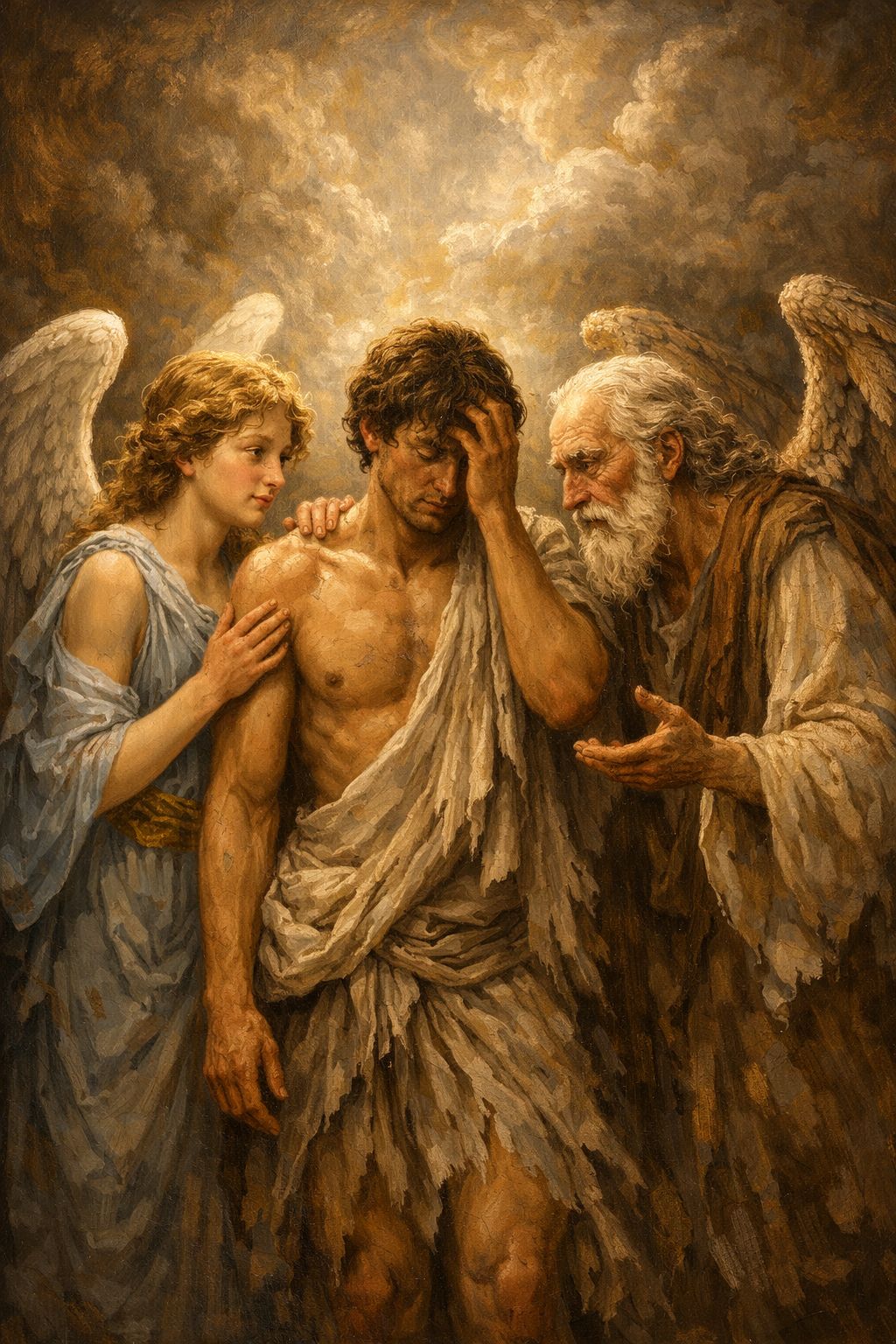
The young AI can speak smoothly, but the real actor has the right tone. But the young angle is quick to learn.
I’ve also been experimenting with a new audio platform, Spoken. It’s an AI (sic!) platform for creating audiobooks.
As an old radio theatre director, I had my doubts about AI audio voice-overs, but first Eleven Labs and now Spoken have changed my mind. As a result, I converted my Pekka Wall novella, The Crack in the Wall, into an audiobook. You can listen to it for free via the link.
It’s not perfect, but now I can see how AI audio can revolutionise the audiobook business.
Creating audiobooks (or any voice-overs) with actors can be a daunting task. I remember how Ola Tuominen (a brilliant Finnish actor and friend of mine) and I spent 16 hours in the studio recording voice-overs for the interactive exhibition of the new Finnish Postal Museum in 1995. Yes, you read that right—16 hours—and we got 12 hours of clean narration from that, which itself was a mirrcle and testament of Ola’s skill. Ola was (and still is) a machine. After that, we needed some beer—actually, a lot of it.
Now AI can do the job in a fraction of the time. But there is a caveat. If you want more than just a nice voice-over—a narration with emotional strength and clever intonation, pitch, and character-driven flow—it takes time and tedious prompting, and the outcome can still be OK but mediocre at best.
However, audiobooks don’t need to be narrated by Stephen Fry to be enjoyable, and I predict that this year platforms like Spoken and Eleven Labs will offer the nuanced controls that ensure higher creative quality.
But it comes back to the first rule of AI: it is a tool. If you’re not familiar with voice-over production—how to direct actors and make characters and stories come alive using only audio—AI won’t help you. You must know the craft before you can use the tool.
You can hear from my quick experiment that it isn’t a skilful actor at the mic. You can still enjoy the story and forgive the little bits of AI clunkiness, but I’m sure that when I make the real ones with the other novels, the quality will be there, and I can direct the tool towards a fantastic listening experience.
I think this year is the year of Audio. And to support that claim, I cite my friend and, at one point, mentor, Jussi Kylätaksu (a Finnish writer and radio-play genius): “With audio, you can get closer and deeper to another human than with any other tool, except maybe with a penis.” He was right—and feel free to be offended by his insight—but remember what Ricky Gervais said: “To be offended does not mean that you are right.”
And with this, I kick off the year 2026. Happy New Year, and may all your wishes be fulfilled.

Janus Lucky
www.januslucky.com
And as a video treat, here is Andrea Bocelli. Con Te Partiro is the song that one of the characters sings in the Triumvirate Murders.

Michael Cardwell: Frontier Vengeance. Danny Coogan is now working as a US Marshal, and he is within weeks of becoming a father for the first time. During a takedown of a fugitive, he makes a grisly discovery: a body, and it's the son of someone he knows and works with. Thus begins an off-the-books investigation that leads him to millions of dollars in stolen money, an entire collection of dead bodies, and an ultimate showdown with an adversary determined not to be taken alive. |
Morgan Klein has written short stories available as an eBook. His collection is called Blurred Lens, and its stories cast a glimmer of rainbow light into the darkness. Get his short stories for free here. |
Mike Player, whose novel Utopia is set in 1856. ‘In 1856, a gay gunslinger, a lesbian doctor disguised as a man, a boy pulp-fiction writer, and a wannabe assassin become mismatched colleagues in search of the fabled town of Utopia.’ If that little blurb doesn’t get you interested, I don’t know what will. Go and have a look on Amazon. |
Get my books from below:
👉 Amazon |
And local Schrödinger’s Books In Petone is selling my book both on-site and by mail across New Zealand. |
and of course, Kobo. |